Showing posts with label Cocktails. Show all posts

Tuesday, December 13, 2011

Portland's New Favorite: St. Jack Reviewed

"Eating snails, I thought that was cool when I was a kid. I think that was like my playing in mud puddles."- Chef Aaron Banett


Last night I had a fabulous meal. Living in Portland my wife and I are never short of good restaurants, but a truly wonderful restaurant experience is something far and few between in almost any city. Good food coupled with good atmosphere is great, but good food coupled with excellent service is something unique – the something which will always get my wife and I to return (and spend more money of course). 

We live in SE Portland right off Hawthorne, a district in-of-itself, which is a wonderful mix of socially-conscious families, urban hipsters, and semi-homeless hippies. A melting pot for good cuisine, SE Portland is a foodie’s dream. Now just south of Hawthorne is a small neighborhood district called the Clinton District, named after its stop and go street lined with pockets of small businesses. And recently, just blocks from where we live, a new neighbor has arrived: St. Jack.

St. Jack is a very French eatery, inspired by the revered cafes of Lyon, holding a dual existence as a cafĂ© in the morning and afternoon and a Lyon Bouchon at night. Owned and operated by Canadian native Chef Aaron Banett (via restaurants in Los Angeles, Vancouver, BC, and San Francisco), St. Jack focuses on rustic “traditional pâtisserie” and 19th century home-cooking, meaning while you will see such things as Steak Frites and Coq a la biere, you should come expecting other traditional delights such as frog legs, blood sausage, and stuffed pigs trotters.

Right when my wife and I arrived we were taken in by the wonderful atmosphere. Where Portland seems riddled with loud music hipster joints, St. Jack is inviting and warm. The music ranges from Jazz and light French pop, complementing the candlelit space while never does it distract. We came earlier than our reservation so we could have some time at the bar.  I, knowing ahead of time what I wanted, ordered the De Rigueur, the English twin of the Brown Derby, and my wife ordered the St. Jack Red, a Columbia Valley red wine purchased by the barrel and personally produced for St. Jack by Guild Winemakers. Both were great. And personally De Rigueur, prepared by bar manager Kyle Webster, was wonderful - just tart and not overly sweet. To accompany these two treats, we ordered their very popular Frog Legs en Persillade, frog legs prepared in a white wine, garlic, and lemon sauce with fresh herbs. Wow, these things were wonderful, nothing of what I expected - tender moist and meaty.


And this only got better with dinner. The Onglet Steak Frites for my wife and the… drum roll… Stuffed Ducks Neck for me – duck neck stuffed with pork sausage, apples, chestnuts and sage. Now generally I will do wine with dinner, especially when accompanied by such uniquely meaty options, but I diverged from my wife’s choice, the Quady North Syrah, for Buffalo Trace neat. While having bourbon (or any whiskey for that matter) with your meal is something which is only just becoming fashionable again, I myself have not often done this, especially when it comes to French food. But, not to my surprise, Buffalo Trace complimented the meal wonderfully (And Mr. Webster, who followed us from the bar to the table, didn’t skimp on portions when I was in need of a refill). The moist sausage with pommes puree (w/ lots of butter) went perfectly with dry oakiness and winter spices of the Buffalo Trace. *I review Buffalo Trace here.

My wife and I didn’t stay around for dessert (we had a movie to catch), so we will have to come back for that. But it is a fact that we will come back. St. Jack is well on its way to becoming a Portland favorite. With the wonderful menu and great service it is a great addition to the neighborhood. 


Photos from stjackpdx.com
Patisserie St. Jack on Urbanspoon

Monday, August 29, 2011

Imbibe Monday: How To Make A (Good) Gin and Tonic


“I never drink anything stronger than gin before breakfast.” - W.C. Fields

There is definitely something to be said about a complex cocktail, finely and delicately built to perfection. But I also am one who leans towards simplicity. Give me a cocktail with a few good ingredients over a Vieux Carre any day. That’s why I think the Gin and Tonic is such a wonderful beverage. Perfect as a summer drink, it only takes two ingredients and some ice. Done! Easy.

Initially introduced in the 18th century by the British East India Company, Gin and Tonics were utilized for medical purposes for the British colonies in India. In the 18th century tonic contained large amounts of quinine, used to prevent malaria, which held a very bitter taste. Thus gin was used to offset the acrimony. Just as dry vermouth harmonizes well in a gin martinis, the quinine (smaller amounts used today) complements the juniper and botanical green notes used in the production of gin. And the very reason it was consumed in the warmer Indian weather led to it becoming a favorable summer treat.

You might be asking yourself why I would even bother writing a whole blog on how to make such an "easy" cocktail; however, even the simplest of cocktails can go down the wrong path. I would have three suggestions to enjoying a good Gin and Tonic: 

First use good gin. Today, there is a much larger market of gin, and some really good stuff is showing up in the micro-distillery sectors. Up and coming distilleries, such as Dry Fly and Breuckelen Distilling Company Inc. (as well as many others) are producing some very complex and intricate gins.  

Second, though it might sound strange to even bring this up, is to use fresh tonic. The worst thing to experience is an offering of Gin and Tonic where your host is using an old half-empty bottle tonic for your cocktail. Buy the small cans if you are not going to finish the tonic in one sitting. It's worth it.

Lastly and most importantly is what kind of ice you use. I am not necessarily a Gin snob but I will admit to being somewhat of an ice snob. My biggest disappointment when I order an Old Fashioned at a bar is when it’s brought to me with crushed or small cubed ice. Different kinds of cocktails use different kinds of ice. When it comes to Gin and Tonic I think large ice is best. This is not a beverage which needs to be diluted quickly – you just want it cold. 


Gin and Tonic Recipe (1 Serving):

2 oz gin
4 oz tonic water

Adjust to taste if needed, don’t ever think it, just use the best ingredients you’ve got. Maybe throw in some lemon (or lime) and juniper berries if you want.

Monday, August 15, 2011

Imbibe Monday: Introducing Jeffrey Morgenthaler and the Barrel-Aged Cocktail

"Coughlin's diet: cocktails and dreams." 
- Doug, from a horrible movie called Cocktail


So my wife and I have been exploring a few cocktails and whiskey treats I have been wanting to add to Imbibe Mondays, but none of them turned out like I wanted so I thought I would cheat a little and post some videos I've been "keeping to myself" about an interesting development in the cocktail world. An exciting time for cocktails, mixologist, and those who love to drink their makings, new ideas and creations are literally being poured out from coast to coast. One of the current trends taking over bars across the U.S. is the barrel-aged cocktail. Literally a cocktail aged in used whiskey barrels these beverages are generally consumed in bars, however, because of the ease and personalized touch anyone can add to these aged cocktails, I wouldn't be surprised to see them start popping up at larger events and weddings.

The creation of this new and innovative idea originated from none other than Portland's own, Jeffrey Morgenthaler of the fabulous Clyde Common, located in downtown Portland one block south of Powell's City of Books. Tending neighborhood taverns, college nightclubs, fine restaurants and upscale lounges since 96, Morgenthaler began writing and blogging in 2004, yet since his move to the Clyde Common his image has grown considerably. Now considered one of the leading mixologist in the world his recipes and mixologist musings have appeared in The New York Times, The Wall Street Journal, Wine Enthusiast, Wired, and Imbibe magazines. Forbes Traveler labeled Morgenthaler one of the "Cocktail Movers and Shakers" of 2007, while the Tasting Panel Magazine knighted him as the "New Leader" in 2009. 

Below are two videos explaining the barrel-aged cocktail process: The first is a Chow.com video of Morgenthaler and another Portlander Evan Zimmerman, the bar manager of Laurelhurst Market, and the second video is Morgenthaler at Tuthilltown Distillery explaining the process using Tuthilltown’s unaged corn whiskey in a barrel cocktail.


One can purchase a barrel-aged cocktail from the Clyde Common for $10, but from a New York Times article I read, in a place such as New York prices can be between $13 and $25! Such high prices are justified, say many bar owners, because of the limited quantities and the actual time invested in creating the cocktails, which have to be constantly watched, tested, and gauged until considered ready to serve.

Click here for barrel-aged cocktail directions straight from Morgenthaler's great blog - a must read for any mixologist.   

*Photo provided by Imbibe.com.

Monday, August 8, 2011

Imbibe Mondays: How to Make the Mint Julep

Ode to the Julep:

"Then comes the zenith of man’s pleasure. Then comes the julep – the mint julep. Who has not tasted one has lived in vain. The honey of Hymettus brought no such solace to the soul; the nectar of the Gods is tame beside it. It is the very dream of drinks, the vision of sweet quaffings.

The Bourbon and the mint are lovers. In the same land they live, on the same food they are fostered. The mint dips infant leaf into the same stream that makes The Bourbon what it is. The corn grows in the level lands through which small streams meander. By the brook-side the mint grows. As the little wavelets pass, they glide up to kiss the feet of the growing mint, and the mint bends to salute them. Gracious and kind it is, living only for the sake of others. Like a woman’s heart it gives its sweetest aroma when bruised. Among the first to greet the spring, it comes. Beside gurgling brooks that make music in the fields, it lives and thrives. When the bluegrass begins to shoot its gentle sprays towards the sun, mint comes, and its sweetest soul drinks at the crystal brook. It is virgin then. But soon it must be married to old Bourbon. His great heart, his warmth of temperament, and that affinity which no one understands, demands the wedding.

How shall it be? Take from the cold spring some water, pure as angels are; mix it with sugar till it seems like oil. Then take a glass and crush your mint within it with a spoon – crush it around the borders of the glass and leave no place untouched. Then throw the mint away – it is the sacrifice. Fill with cracked ice the glass; pour in the quantity of Bourbon which you want. It trickles slowly through the ice. Let it have time to cool, then pour your sugared water over it. No spoon is needed; no stirring allowed- just let it stand a moment. Then around the brim place sprigs of mint, so that the one who drinks may find the taste and odor at one draft.

Then when it is made, sip it slowly. August suns are shining, the breath of the south wind is upon you. It is fragrant cold and sweet – it is seductive. No maidens kiss is tenderer or more refreshing, no maidens touch could be more passionate. Sip it and dream-it is a dream itself. No other land can give you so much sweet solace for your cares; no other liquor soothes you in melancholy days. Sip it and say there is no solace for the soul, no tonic for the body like old Bourbon whiskey." - Joshua Soule Smith


Mint Julep Recipe (1 Serving):

3 sprigs fresh mint
2-3 teaspoons simple syrup
3 ounces (roughly) bourbon

*There are a lot of weird recipes for the Mint Julep out there - most of them are the very first recipes which  showed up when I did a Google search. If a recipe suggest club soda, flavorings, powdered sugar, etc, then don't bother with it. This is a classic cocktail: sugar, mint, spirit. Keep it simple and your taste buds will be rewarded.

Step 1: Put mint leaves and about half the simple syrup over the leaves in a Mint Julep cup, old-fashioned glass, or similar vessel you may have. I suggest a 2:1 sugar to water ratio syrup. You can try it any way you like but this seems to generally be the best choice for allowing a little more sugar content and less watered down beverage.

Step 2: Lightly press and meld leaves together with the syrup. Using the muddler brush the mint and sugar oils along the sides of the cup, painting and coating the walls. This is not a heavily mixed drink so you want to allow as much area to hold these oils for when you add the ice and bourbon. I CANNOT STRESS ENOUGH: DO NOT BRUISE YOUR MINT. If this happens you will have a beverage with strong and unpleasant vegetal character.

Step 3: Fill glass with crushed ice till it cones on the top of the glass. Add the bourbon, pouring slowly over the top. Some recipes add the bourbon first, I on the other hand like the more traditional way of pouring the bourbon over the ice, allowing the bourbon to cool on its way down. Because the ice is crushed, there is little surface area, which allows for cooling to happen quickly without stirring.

Step 4: Taking an additional mint in your hand (enough to cover much of the top opening of the glass), slap the mint with your hand, shocking it and allowing it to stick straight up. Garnish on top. When someone takes a drink with a straw, if you have one, they will be placing there nose right in the middle of the mint, smelling the fragrance as they sip.  

Step 5: Enjoy!


Mint Simple Syrup Recipe:

2 cups unrefined sugar
1 cup water
1 small handful of mint

Step 1: In a medium saucepan combine sugar and water. Bring to a boil, stirring, until sugar has dissolved. Allow to cool.

Step 2: Add mint and cold step for about 24 hours. 

Tuesday, July 19, 2011

Imbibe Mondays: How to make the Harvest Moonlight Cocktail

Presenting a Portland Craft Cocktail:


"I got my Dickel, I got my sausage, this is a happy hour!"
- Anonymous Camper (hint: I'm married to her.)

So far, for most of my Imbibe Mondays (I know its Tuesday, oops!) I have stuck to fairly simple recipes. I have generally used recipes with few ingredients, and any “cocktail seasoning” I have used consisted of store bought bitters. Good bitters no less, I thought I would stretch out a little and make a cocktail, still fairly simple, but with an added twist of adding homemade cinnamon spiced agave simple syrup.

Constantly perusing the net for good cocktail recipes, especially ones that fit my current stock of spirits, I always seem to find myself coming back to Portland Craft Cocktails. Due to their dedication for quality, promotion of craft spirits, and their simply huge catalogue of great recipes, I can always find what I’m looking for. Recently I found the Harvest Moonlight cocktail, one of the best recipes to use for a white dog whiskey because the cinnamon agave syrup complements and tones down the the tenacious quality of the white dog. Easier than the Old Fashioned, this is a quickly made and satisfying cocktail.

Harvest Moonlight Recipe (1 Serving):
1.5 oz white whiskey (Edgefield White Dog)
Dash of the cinnamon spice agave simple syrup (Directions for making the syrup are listed below)
2 dashes Angostura bitters 

Directions (simply simple):
Step 1: Place all three makings in a lowball glass. I still had Edgefield's White Dog on hand so that's what I used, but any white dog works, especially barley based unaged whiskeys.


I used about a quarter to half a teaspoon of the cinnamon spice agave simple syrup.


Step 2: Mix ingredients, add one or two large ice cubes, and mix again until well chilled.

Step 3: Enjoy! 

Cinnamon Spiced Agave Simple Syrup Recipe:
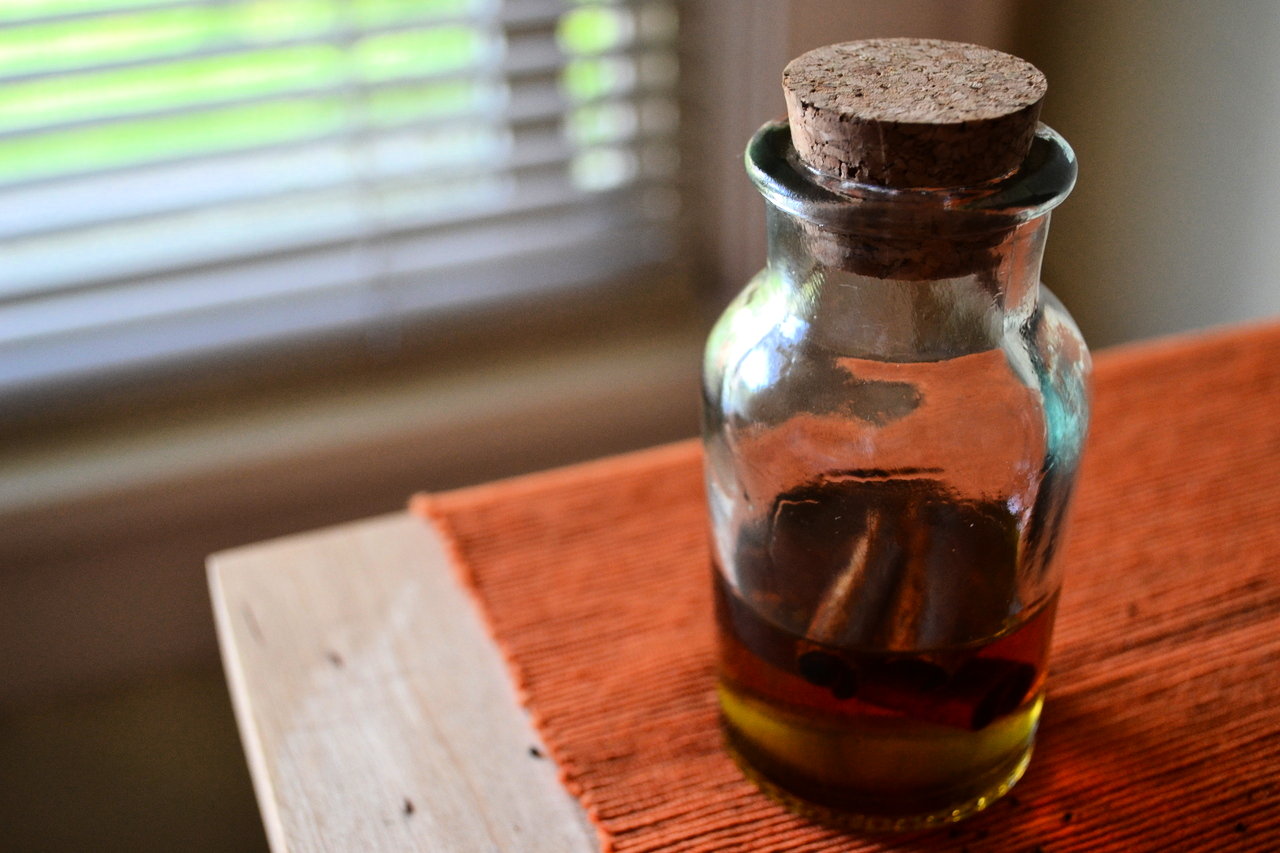
Heat raw blue agave syrup with spring water at a 1:1 ratio with 1-2 medium broken Ceylon cinnamon sticks on stove-top until fragrant. Bottle. Stores 7-10 days.


Monday, July 11, 2011

Imbibe Mondays: How to make the Manhattan Cocktail:

Conspicuous Origins:


"Talking about compounders of drinks reminds me of the fact that never before has the taste for "mixed drinks" been so great as at present and new ideas, and new combinations are constantly being brought forward. It is but a short time ago that a mixture of whiskey, vermouth and bitters came into vogue. It went under various names-- Manhattan cocktail, Turf Club cocktail, and Jockey Club cocktail. Bartenders at first were sorely puzzled what was wanted when it was demanded. But now they are fully cogtnizant of its various aliases and no difficulty is encountered." 
-"The Democrat", New York, 5 September 1882

By name the Manhattan cocktail stirs thoughts of grandeur. It is one of the most classic of all cocktails, rivaling the Sazerac and Old Fashioned at best.  Today with the new great trend of rye whiskey, using rye in the Manhattan is again becoming more common. And truly one of the traditional ingredients in a classic Manhattan was rye, hinting, as I’ve said before, to a past when rye was equal to, if not greater to, bourbon. Well known as possibly the perfect cocktail for any party, the Manhattan is all an American drink, but this isn’t the All-American drink of West in which John Wayne is knocking back “rough young rye.” This is the American drink of brightly lit skylines and the "Golden Years" of the 20s – an America which suggests growth and prosperity. As with any good cocktail the origin is always fuzzy and over glamorized , but the name at least suggest that it originated from the city which has always lived on the edge (though the name most likely originated from Manhattan Club in the early 1870s - no doubt a place on the edge). And Indeed the 1928 film of the same name, expresses this desire to push the envelope. By playing the part in bridging the gap between silent and talk films, much less being filmed by, Dorothy Arzner, one of the only women in the early 20th century making major motion pictures, the Manhattan Cocktail film solidified the Manhattan cocktail as imbibing audacity. And today the Manhattan still lives up that image.

When I first made this drink I mixed up the two recopies. Using bourbon whiskey I followed the rye version and used one part whiskey to one part vermouth and orange bitters. This taught me a quick lesson. The problem with using 1 part bourbon to one part sweet vermouth is the sweet vermouth will overcrowd the bourbon. And unless you are an ultra-sweet tooth, I suggest using rye in the rye version since it just perfectly balances out the sweetness. Either way I would suggest you experiment until you find what you like.

Rye Version (1 Serving):
1oz rye whiskey
1oz sweet vermouth
2 dashes orange bitters (I use Fee Brothers)
Maraschino cherry

Bourbon Version (1 Serving):
1.5 oz bourbon
.5 oz sweet vermouth
2 dashes angostura bitters
Maraschino cherry

Directions (as straight forward as they come):
Step 1: Add whiskey, vermouth, and bitters to a mixing glass filled with ice.  Chill a glass with ice and water or put the glass in the freezer to cool. For my particular mix I used Imbue Bittersweet Vermouth.

Step 2: Stir for about 30 seconds until ingredients are well chilled.

Step 3: Strain into cocktail glass and add a cherry or two.

Step 4: Enjoy!

Monday, July 4, 2011

Imbibe Mondays: How to Make an Inverted Martini and A Review of Imbue Bittersweet Vermouth

A Northwest Twist on a Classic Cocktail:

Occidental Hotel from Montgomery Street, San Francisco 1866

“There is nothing revolutionary about cocktails, only evolutionary” - Chris McMillian

Dubbed by H.L. Mencken to be “the only American invention as perfect as the sonnet,” the martini cocktail has its origins from the middle of the 19th century with a drink called the Martinez. Served at the Occidental Hotel in San Francisco, the Martinez evolved over time from a sweetened version of gin, called Old Tom, and sweet vermouth to a version of dry vermouth and gin we know today.

Though commonly associated with our favorite “Double O” agent, the classic martini used gin rather than vodka. On this Monday afternoon I will be making a Northwest variation of this martini called the Inverted Martini which uses two parts vermouth to one part gin. But before I get into the actual recipe I want to quickly review my secret ingredient of the day.


Imbue Bittersweet Vermouth Review: 

I recently purchased a fairly new locally produced Portland vermouth (the company just celebrated its first year), called Imbue. Not only is this vermouth made with Oregon Pinot gris, the white grape varietal of which the Willamette Valley is mast famous for, but it is unique in that, it has created an entirely new category of vermouth, “bittersweet.” Imbue plays a beautiful balancing act between the sweetness of the classic “blancs” with a wonderfully strong character of bitterness.

Notably Imbue Vermouth is not to be associated with your granny’s preferred post-supper snifter. Created in collaboration between longtime friends and winemakers Derek Einberger and Jennifer Kilfoil, Imbue is aged in American and French oak barrels, macerated with botanicals and then infused with an artisan Oregon brandy from Clear Creek Distillery (known most famously for their single malt whiskey).

Price: $22.99 for a 750ml bottle. Sold at various Portland locations or request your local wine merchant to special-order it through imbuecellars.com.

Alcohol Content: 16.5% alcohol by volume.

Color: Somewhere between a chenin blanc and chardonnay, Umbue is imparted with faint aurelian tint and accents of light honey.

Nose:  An unassuming and delightful fresh bitter sweetness. An inviting crisp and easy citrus with freshly cut oak (though not overly woody) and cream fragrances.

Tasting Notes: The front has a robust and articulate tart arrival which lands on the mid and stern of the palate and develops into comprehensive and lovely pear, lemon and pineapple essences. Melding these flavors together is an overriding creaminess which coats the entire palate. Attempting to arise out of this herbaceous bittersweet treat is a spiciness which never fully emerges, though this is not a negative thing, I feel it simply adds to the complexity and pleasure of the drink.

Conclusion: I was pleasantly surprised by the composite and full bodied flavor of this beverage. This is a gin I would actually enjoy drinking on the rocks.  


Inverted Martini Recipe (1 Serving):

2 oz Imbue Vermouth
1 oz Gin
Ice and Orange Zest

Step 1: Fill martini glass with ice or place in the freezer to cool while you prepare the beverage.

Step 2: Fill ice up to the top of a mixing glass and add the 1 oz of gin. If I wanted to give this cocktail the ultimate Northwest experience I would have used House Spirits Aviation Gin but I still have some Tanqueray left in my bar so the Aviation will have to wait.

Step 3: Add 2 oz of Imbue vermouth. Just as I said with the bitters in the Old Fashioned post, you neither need to be afraid of Vermouth, especially in a Martini. Gin is an aromatically and botanically based spirit. It has herbs and spices which are soaked or infused in it during the distillation process to give it flavor. Vermouth is an aromatically and botanically infused wine. The herbalism of the vermouth and the herbalism of the gin are complementary to each other which allow the magic to happen. On top of this Imbue vermouth phenomenal standalone.

Step 4: With one hand holding the mixing glass, stir ingredients until it is as arcticly cold as possible without being over diluted. And I know what you’re thinking. While James Bond’s iconic cocktail, the vodka martini, can be shaken, which allows the beverage to become as extremely cold, it's simply a preference issue because doesn't have any vermouth within it. A gin martini, however, should be stirred, not shaken. As with all cocktails, part of the enjoyment of the beverage is the ascetic nature embedded within each drink. And only a few cocktails can achieve the translucent crystalline clarity such as the martini. A gin martini should be silky and smooth. When you shake the drink you deposit air bubbles in the drink, making it frothy. This is where you hear people say the gin is “bruised.”Stirring takes more time, but it is worth it.

Step 5: Take your chilled martini glass and strain in the makings. Take a lemon zest (leaving off the white pith) and spray lemon oil over the beverage by twisting the zest. Brush the edge of the glass with the twist and let it go for a swim.

Step 6: Enjoy! And Have a good Fourth of July!

Monday, June 27, 2011

Imbibe Mondays: How to Make a Classic Old-Fashioned Cocktail:

Redeeming a Classic:

"When properly made, this cocktail [the Old Fashioned] can represent the 
pinnacle of the bartenders trade. When done improperly, which is 
more often the case, it can be a disaster of mediocrity."
- Robert Hess, co-founder of the Museum of the American Cocktail

The original definition of a cocktail was any sugar, spirit, and bitters. Conforming to that definition, the two drinks in today’s cocktail lexicon, are the Sazerac and the Old-Fashioned. For this post I will be walking you through (one of) the correct ways to make an Old-Fashioned in the classic sense.

Holding the current title of invention, the Pendennis Club in Louisville, Kentucky is reputed to have invented the Old-Fashioned in the 1880s. Though it is much more likely the name resulted from someone asking the bartender to fix a cocktail “the old fashioned way.”


The Old-Fashioned is one of the most personal of all drink one can have, yet in recent years this drink has somewhat “lost its way.” Whether it be made with club soda, orange syrup, or muddled fruit at the bottom of the drink – all of which I don’t think have proper places in the drink – one or all of these ingredients can produce a negative experience. This "Old-Fashioned" pictured above is the bastard product of years walking down that wrong path. And no, I will not tell you where I bought this ugly thing. Hopefully though, this post can lead us back to the right path.

Old-Fashioned Recipe (1 Serving):

1 sugar cube
1 splash of water (approx. 1oz.)
1 small piece of orange zest
2-4 dashes of Angostura Bitters
2 oz (quality) bourbon whiskey

Step 1: Place the sugar cube in an Old-Fashioned (lowball) glass. Soak it down with 2-4 dashes of Angostura bitters and a short splash of water. Don’t be afraid of bitters. Bitters is a term which came out of the 18th century and today would much better be described as cocktail spice or seasoning. Binding and blending all the flavors together, you don’t notice when it’s present in the drink, but if it’s not there you really notice something is missing. I tend to really like bitters so don’t be squeamish about being generous.

Step 2: Crush the sugar with a muddler, chopstick, strong spoon or anything you have on hand. I generally cut out my orange peel while I wait for the sugar to soak up all the water and bitters, making it easier to crush. Just make sure to avoid the “ice-tea effect” by grinding the sugar into a completely clear solution. You can use simple syrup if you prefer, but sugar cubes are preferable because it allows you to adjust the level of sweetness without further diluting the cocktail (ex: 2 sugar cubes w/ same splash 1 oz. water).

Step 3: As said before, I don’t think orange syrup or muddled fruit have a place in the drink but you do want to add the layer of flavor which comes from the citrus, so adding a small piece of orange zest is a necessary. Using the zest (making sure you have only the zest and not the bitter white part of the orange) you need to press the orange peel with a muddler into the bitters and sugar. What you are doing is releasing and expressing the oils, so make sure not to tear apart the zest. At this point you should have a wonderfully fragrant foundation.

Step 4: Next I add the bourbon, or rye if you like. I generally prefer the spiciness which comes along with a nice rye whiskey but some great substitutes for a rye would be bourbon with a high rye mash bill such as Basil Hayden or Bulleit Bourbon (my “go-to bourbon”). Both provide the spiciness you get from rye but still maintaining some of those nice vanilla undertones of a quality bourbon.
*You can switch up step 4 and 5 if you like. This is just my personal way of doing things.

Step 5: Add a large ice cube. Stir and combine – till it’s nice and cold. I understand that many won’t have large ice cube trays, so regular freezer ice is fine. The reason why large ice is preferable is because the dilution rate will be much slower, thus allowing for a more pleasant experience. For those who object to using freezer ice – I’m not going to detail that out – that’s a bit demanding for a homemade cocktail.

Step 6 (Optional): Add 1-2 maraschino cherries. Now this is also important: make sure you buy quality maraschino cherries. The worst thing you can do is build a quality drink and then destroy it with maraschino cherries dipped in High Fructose Corn Syrup. And believe me, there is a difference in taste.

Step 7: Enjoy!


For Portlanders: Those of you looking for a bar/restaurant in Portland, OR who are weary of ordering an Old Fashioned, or any cocktail for that matter, due to bad experiences, try Clyde Common or Beaker and Flask. You won't be disappointed.