Showing posts with label White Dog. Show all posts

Thursday, May 23, 2013

Jim Beam Jacob's Ghost White Whiskey Review:


I won’t go on another rant about the litigious category of white whiskey for I’ve already done that. But with Jim Beam’s, still fairly new, release of Jacob’s Ghost, I believe we are finally starting to see some sort of defining categorization, or at least a product which will drive the category in a foreseeable direction. Aptly called a white whiskey, Jacob’s Ghost is a whiskey in the real sense. Using the very same mash bill as Jim Beam’s White Label, Jacob’s Ghost has at least one year of aging with an added filtration process to remove any of the color gained from the barrel. The very target groups of this label, I believe, are mixologist. With the initial youngness transformed by a little age, Jacob’s Ghost proves to be a capable mixer, enough to take the place of a simple vodka cocktail.

Jim Beam Jacob’s Ghost White Whiskey:

Price: Around $21.99 for a 750ml bottle. A don’t understand why they are charging more than the white label which takes years more to mature, but that’s a whole other issue. At least they didn’t do what Jack Daniels did by charging a fortune for their white dog.

Packaging/Labeling: Just ok. The “ghost of Jacob” sticker on the front is very cheap and tacky.  

Alcoholic Content: 40% abv, 80 proof. I would have expected more at the price point.

Nose: The nose impressed me much more than I anticipated. An inviting, light, clean and sweet first impression. This is no white dog. It has a vanilla and grainy sweetness. An oaky-ness does come through as well as some pure malt – not unlike some white malt whiskies I have nosed, yet more refined.

Palate:  A viscous palate with lightly oaked vanilla, cereals and a spicy, very dry finish. It literally sweeps up all the moister in your mouth, leaving you a bit thirsty. It’s calling for a mixer, and with the lack of barrel sweetness I think I could really get into it by mixing it with ginger ale.

Conclusion: Pleasantly surprised by this. It’s a very solid entry into the category. I can’t find many negative points, beside the dryness. Hence, it doesn't do very well as a simple nightcap, unless you have some ice in it. Geoff Kleinman of drinkspirits.com made a very good point by stating that “in some ways Jacob’s Ghost is the flip side of the coin from Jim Beam’s Devil’s Cut. Rather than pumping up the oak, Jacob’s Ghost reduces the impact of the barrel on the whiskey and creates a spirit that is light, dry, and easy to drink, especially with soda.” Hopefully this all means that Jim Beam will be breaking into more experimentation, like Buffalo Trace has been doing for quite some time. Is it something I would tell you to go out and purchase right now? No. But if you need something for a party and want to change things up, you should try Jacob’s Ghost.

Friday, February 1, 2013

White Whiskey Climbing the Ranks:


Just another example of white whiskey climbing the ranks as a viable product: Chuck Cowdery made a small post about the the delay of Beam's Jacob's Ghost which I believe highlights an interesting trend. Since micro-distilling has jumped on the scene, most have not known what to make of many of these young and unaged spirits flooding (or more of a trickle) into the market. Is it a viable product, even within a niche market? Will it only be something bartenders latch onto? Or is it something that will disappear once many of the current craft distillers release extensively aged products? I think Jacob's Ghost is a possible clue into the turning market. Tuthilltown, as one of the first major players in the craft distilling industry, has been putting out partially aged products for some time now. And without getting into the small barrel debate, we see there is more of an appeal for products that are partially aged, to take some of the green-ness out. Jacob's ghost is doing something on a large scale and it appears they are putting a bit more thought into it than Jack Daniels with the release of their unaged white whiskey. Aged in barrels for one year, the products, though "still raw, [is] much milder than the white dog, with significant amounts of corn body and barrel sweetness." This is a product almost entirely produced for the bartender and at $22.00 per bottle, compared with Jack Daniels ridiculously high price tag, this is nothing to dismiss. Something we have rarely seen and something which might be a turning point in understanding the place of young whiskey.

Photo from guyism.com.

Saturday, July 23, 2011

Adventures in Moonshine: A Book Review of Max Watman’s Chasing the White Dog


“Authenticity is evasive and hard to understand in America. Why were there half a dozen honky-tonk beer joints in New York City at the turn of the century? I don’t know what to make of Inner Harbor of Baltimore, Fisherman’s Wharf in San Francisco, or the French Quarter in New Orleans. For that matter, I don’t know what to make of my own town, in which the historical review board insists that the houses continue to be built as if it were the middle of the nineteenth century, to maintain an authentic cohesion, without stopping to consider that nothing is more artificial than building nineteenth-century houses in the twenty-first century.

It’s a slippery thing. There is no denying that the French Quarter is really the French Quarter or that Fisherman’s Wharf is built on the quays. These places have found themselves, due to the pressures of commerce or culture, in a state of aggravated self-consciousness, compelled to emulate and replicate their salient features until artifice overtakes authenticity.”
– Max Watman from Chasing the White Dog

Checking out from the brewers shop with flaked maize, 6-row pale malted barely, flaked rye, rye malt, a 3-gallon carboy, champagne yeast, a hydrometer, and a thermometer, Max Watman's cashier (Bella he calls her) explains to him that she isn't going to enter his information into the computer, saying, "You were never here." Watman is up to something and Bella knows it. For fear of imprisonment, for Bella and Watman both, it was better pretending that nothing was going on. Watman was in pursuit of the white dog and the first hurdle was to get out of the shop as quickly as possible.

Watman’s book Chasing the White Dog: An Amateur Outlaw's Adventures in Moonshine, is about moonshine. It is about drinking moonshine, making moonshine, and the history of moonshine. What separates Watman’s account from all the previous history books and novels written about the Whiskey Rebellion of 1794, Prohibition of the 1920s, and “backwoods-boozers” of the South is that, when one comes to the end of page 290, the legends and mysticism behind the outlaw spirit dissipates, yet the allure is still just as appealing. As with any introduction to the history of distilled spirits, one begins to understand that much of the alcohol resting on ones bar is the product, not simply of quality producers winning out over the less able-bodied distillers, but rather it is the culmination of a complex and intricate history. After reading Watman’s book one is brought into a world which is quite uniquely an American phenomenon and yet completely separated from the multinationals of Jack Daniels and Jim Beam, two of the torch holders of American spirits.

Marvin 'Popcorn' Sutton, one of Watman's crucial characters,
sits next to his still in Pigeon Forge, Tennessee.
In 2007Sutton was arrested for illegal sales of alcohol.

Watman’s book, though very well received, has generally received flak for providing “historical interpretations [which] are not always reliable.” But on reading his book I find his interpretations are not necessarily unreliable, rather they draw the reader into the history of white dog from an entirely different vantage point – one not generally received by traditional interpretations. The book doesn’t detail the exciting times of Al Capone, the movements of temperance and those licentious speakeasies of New York. Though he does touch on each, Watman’s focus is one of self discovery, his journey of producing his own home-distilled white lightning, and one which details the genuine and personal lives of those who have been producing the stuff for the last century. One learns the largest illegal moonshine black market is located, not in the South, but in Philadelphia, and that many moonshiners, though some matching the classical “backwoodsy” glamour we are all familiar with, are fairly "normal" family-oriented people just trying to make a living. One of the most important features of the book being the historical linkage Watman creates between moonshiners, new and old, with micro distillers of today.

Not that this is some kind of revisionist account. With the allure of the history still very present in this book, this is not a thorough and detailed history of moonshine, or spirits in general. Rather it is a starting point where one can get their feet wet. Intriguing and wonderfully written, one is hard-pressed, finishing the book, to resist the urge to take a trip down to their local liquor provider and pick out a bottle of white lighting. Highly recommended, this is a fun and exciting account of one mans journey into the world of moonshine.

Tuesday, July 19, 2011

Imbibe Mondays: How to make the Harvest Moonlight Cocktail

Presenting a Portland Craft Cocktail:


"I got my Dickel, I got my sausage, this is a happy hour!"
- Anonymous Camper (hint: I'm married to her.)

So far, for most of my Imbibe Mondays (I know its Tuesday, oops!) I have stuck to fairly simple recipes. I have generally used recipes with few ingredients, and any “cocktail seasoning” I have used consisted of store bought bitters. Good bitters no less, I thought I would stretch out a little and make a cocktail, still fairly simple, but with an added twist of adding homemade cinnamon spiced agave simple syrup.

Constantly perusing the net for good cocktail recipes, especially ones that fit my current stock of spirits, I always seem to find myself coming back to Portland Craft Cocktails. Due to their dedication for quality, promotion of craft spirits, and their simply huge catalogue of great recipes, I can always find what I’m looking for. Recently I found the Harvest Moonlight cocktail, one of the best recipes to use for a white dog whiskey because the cinnamon agave syrup complements and tones down the the tenacious quality of the white dog. Easier than the Old Fashioned, this is a quickly made and satisfying cocktail.

Harvest Moonlight Recipe (1 Serving):
1.5 oz white whiskey (Edgefield White Dog)
Dash of the cinnamon spice agave simple syrup (Directions for making the syrup are listed below)
2 dashes Angostura bitters 

Directions (simply simple):
Step 1: Place all three makings in a lowball glass. I still had Edgefield's White Dog on hand so that's what I used, but any white dog works, especially barley based unaged whiskeys.


I used about a quarter to half a teaspoon of the cinnamon spice agave simple syrup.


Step 2: Mix ingredients, add one or two large ice cubes, and mix again until well chilled.

Step 3: Enjoy! 

Cinnamon Spiced Agave Simple Syrup Recipe:
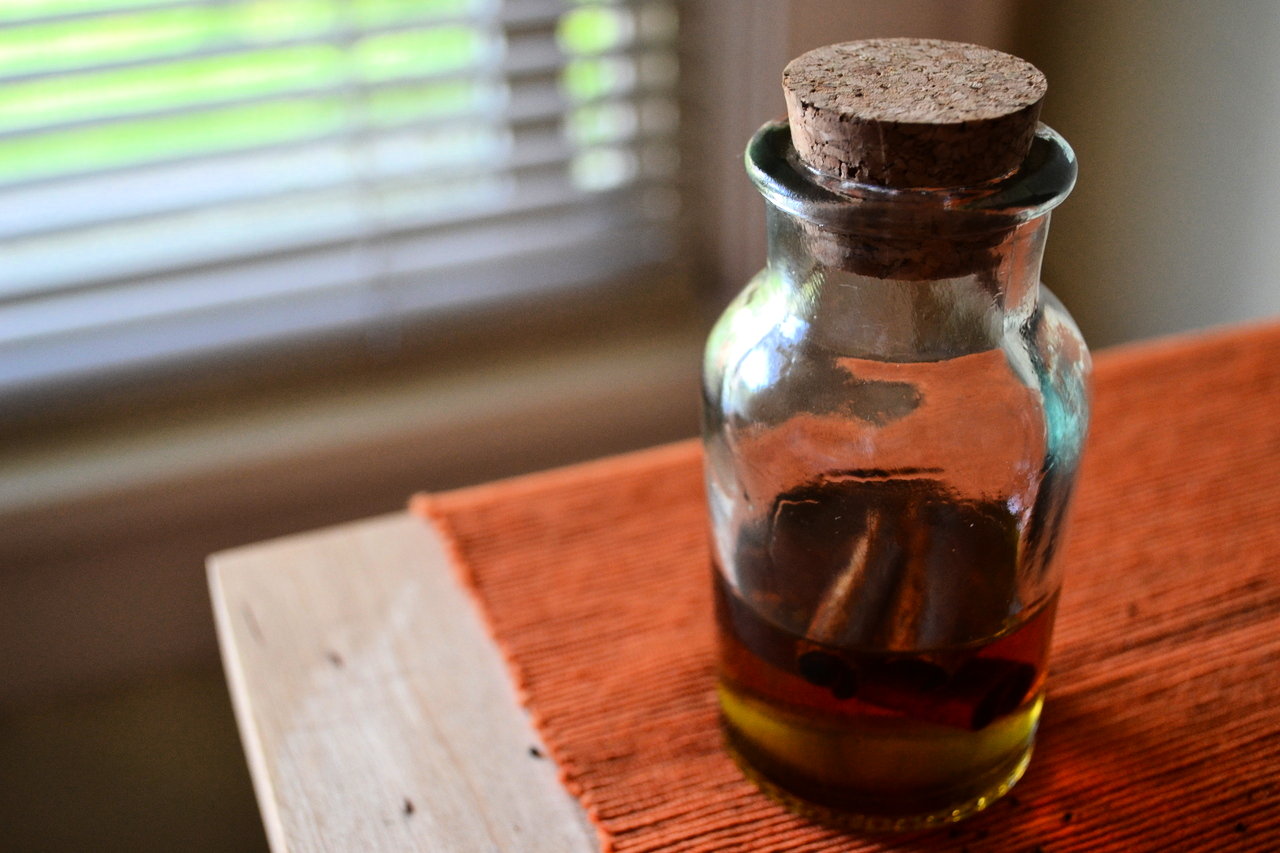
Heat raw blue agave syrup with spring water at a 1:1 ratio with 1-2 medium broken Ceylon cinnamon sticks on stove-top until fragrant. Bottle. Stores 7-10 days.


Friday, June 24, 2011

Edgefield White Dog Whiskey Review:


What's the Deal with White Dog?

"Well, between Scotch and nothin', I suppose I'd take Scotch. It's the nearest thing to good moonshine I can find." -William Faulkner

One of the trendiest spirits on the market right now is unaged whiskey, that is moonshine (or white lightning, white dog, mountain dew, etc). It seems that almost every micro-distillery, and large corporate distillery following in their footsteps, are jumping on the moonshine wagon. Now to clarify, moonshine is technically the name given to illegally produced liquor which, as I have been reading from Max Watman’s book lately, is generally distilled from sugar (more on that another time). But benefiting on the nostalgic aestheticism of a backwoods hooch producers many distilleries are naming their unaged whiskey moonshine, currently the label dominating the US market is being White Dog.

So what is unaged whiskey? Basically it’s the crystal-clear newborn distillate which after coming right of the still, rather than being but into a barrel for aging, is packaged and shipped as is – lacking color and all of the flavor gained from the barrel, the distillate keeps the “base of the spirit” which provides the participant with the distinct flavor of the mash. Where one hears of Vodka being distilled one hundred times so as to have purest and most tasteless spirit possible, the distillers of unaged whiskey are attempting to maintain the distinct flavor and aroma of the spirit, unassociated from the caramel, cinnamon, vanilla flavors, etc., typically found in aged spirits.

Some believe the recent popularity of unaged whiskey will not became a dominant category, but I on the other hand feel that to say it won’t is to overlook the reason its popularity has grown in the first place. There are various reason the trend of new-make (Scottish term) has risen over the last few years but the greatest factor for increase follows hand-in-hand with the Micro-distilling boom which is occurring in the US and abroad. Mainly as an outgrowth of economic pressures white dog has become the first choice spirit to produce for any start-up micro-distillery. Setting up a distillery is a large investment coupled with the long term investment of having to wait for whiskey to develop into maturity. Producing an unaged spirit allows a distiller to have immediate cash flow. If the distillery boom keeps up pace, we are simply going to see more white dog on the market and more competition and experimentation along with it. And Moonshine has always had a large market, as was shown in Max Watman’s book, but the difference today is there is a legal market for it – one which desires to produce quality products to a thirsty population of old and new whiskey drinkers who are wanting something new, as well as wanting a way to connect with the past legacy of American moonshiners.
 
On reading a New York Times article on moonshine, there was an interview of an unnamed moonshine hobbyist of 30 years. He states that he has been “telling people for years that they have to taste [unaged whiskey], so that when they taste [aged] whiskey, they can find their way around the inside of their mouth.” Unaged whiskey can provide something the general public has had little access to: a whiskey that can be a teacher and a transition spirit into other aged whiskeys. One which can actually allow them to taste and follow the change which is made through the barrel. This first tasting I am providing is one such example. With the Edgefield distillers presenting this fairly new White Dog Whiskey to the public, one can taste a unique whiskey in its own right while also having a great comparison for their Hogshead Whiskey, since the White Dog is simply the unaged version of it.


Edgefield White Dog Review:

Price: $17.50 for a 375ml bottle. Sold exclusively at McMenamins locations.

Packaging/Label: Straight of the shelf, there is no box or excess packaging. The label is simple, yet holding the McMenamins artistic flair as always. On a small note the material of label feels a bit cheap to the touch, but overall not a big issue. There is a plastic wrap on the top cap which seems unnecessary since they have a sticker/seal strip over the bartop cork. Synthetic cork (the more I read on these the less I am convinced they are a better alternative to corks in terms of their environmental impact) however I don’t feel they take away from the aesthetic appeal.

Alcohol Content: 46% alcohol by volume, 92 proof

Color: Clear and oily.

Nose: Upon the first nosing I was very surprised by how strongly the barley stood out while the alcohol note was subtle to the point that I could breathe deeply without being hit in the face. A sourdough flavor rises quickly but settles down into something more yeasty. Hints of banana and citrus. Green gauges, unripe apple, bitter grapes, and bitter rice wine and some floral notes. Dark chocolate - very dark. I was still quite baffled by the nose until jackfruit came to mind. Most likely, if you have never been to India or some other southeast Asian country, you have never tasted jackfruit. It's similar to a tart banana  and smells... well, it’s very unique. Think Juicy Fruit.

Taste: What a transition from the nose to the first taste – it is only upon tasting it does the real whiskey overtones come out. Unripened, fresh Brazilian nut and possibly a hint of pistachio. I think of fresh green bark or the inside of a fresh twig when split in half. Cereal grains. Raisin Brand, yet unripe raisins. Mild hints of banana and citrus nuances which were found in the nose. The texture comes off oily yet ends grainy and dry. The light burn settles on the tongue and not in the back of the throat which warms ever so slightly as you swallow.

Conclusion: Honestly, I am still quite undecided about it. I defiantly enjoyed the tasting compared to the nose, which confuses me more than anything. I don’t think I would designate this a place on my “relaxing time” shelf. I still feel that I need to give it another go. I haven’t yet tried adding water, nor have I let it sit very long to open up which could be a significant factor in allowing some of the harshness to die down. I am very interested in trying this in a cocktail since it has such a great texture and because there are so many great unaged spirit cocktail recipes floating around these days. Another update will be needed.